This is the final module of the SMU-IPAS Graduate Certificate in Insolvency and Restructuring programme. This module will integrate and provide a coherent overview of the various insolvency and restructuring concepts, knowledge and tools taught in Modules 1 to 10. This will be accomplished through a combination of lecture and case study that is drawn from an actual real-life restructuring case where participants will be expected to apply what they have learned in the programme to analyse and recommend different restructuring outcomes. Participants will also be exposed to and provided the opportunity to discuss emerging issues and current developments within the Insolvency and Restructuring industry.
Finally, there will be a discussion with senior industry practitioners who will provide guidance on career and development opportunities in the industry.
This module is part of the Advanced Certificate in Insolvency and Restructuring.
LEARNING OBJECTIVES
At the end of the module, participants will be able to:
- Gain an understanding and coherent overview of the various insolvency and restructuring concepts, knowledge, and tools
- Acquire the ability to apply various insolvency and restructuring knowledge and skill sets into analysing a distressed and/ or restructuring situation
- Gain the knowledge and awareness of emerging issues and current developments in the Insolvency and Restructuring industry
- Know the various potential career opportunities and pathways within the Insolvency and Restructuring Industry
WHO SHOULD ATTEND
- Newly qualified accountants and lawyers pursuing R&I practice or mid-career accountants/ lawyers from other specialisations
- Restructuring/ Financial Advisers
- Bank/ Lender work-out groups
PREREQUISITE
Participants should preferably be a degree holder, in any discipline, and have at least one year of working experience.
ASSESSMENT
As part of the requirement for SkillsFuture Singapore, there will be an assessment conducted at the end of the course. The mode of assessment, which is up to the trainer’s discretion, may be an online quiz, a presentation or based on classroom exercises.
Participants are required to attain a minimum of 75% attendance and pass the associated assessment in order to receive a digital Certificate of Completion issued by Singapore Management University.
SPEAKERS
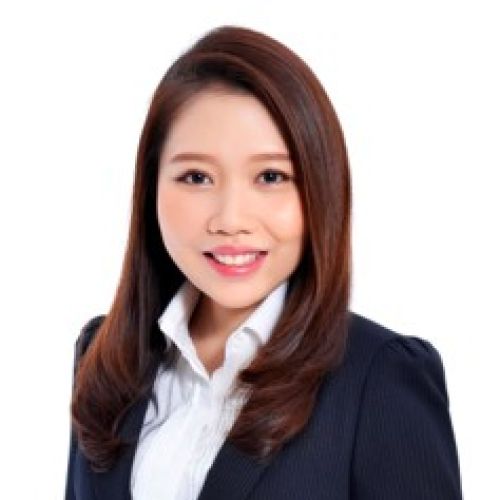
Caroline Yap
Caroline is a Managing Director within PwC Singapore’s Deals Advisory – Business Recovery Services practice. She brings over 10 years of professional experience in public accounting and deals advisory, with a diverse industry portfolio of clients in both public and private sectors.
She oversees several high-profile insolvency engagements at PwC, involving a wide spectrum of stakeholders. She is actively involved in comprehensive investigative work, complex legal proceedings, driving asset recovery strategies, schemes of arrangement and external stakeholder management.
She is a Chartered Accountant of Singapore, certified under the Institute of Singapore Chartered Accountants (ISCA) Singapore Qualification Programme (SQP) and a member of INSOL International.
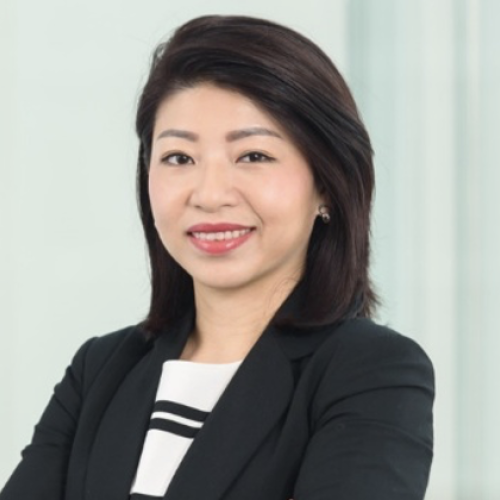
Clarene Chai
Clarene is a Director at the Business Restructuring Services department of PwC and has extensive experience in restructuring & insolvency services in Singapore, Hong Kong and Malaysia. She specialises in liquidation, judicial management, receivership, scheme of arrangement and debt restructuring for distressed companies. Clarene has assisted a diverse range of clients, both listed and private entities in a multitude of industries and cross-border transactions spanning across Singapore, China, Malaysia, Indonesia, Canada and U.S.
Clarene is a Chartered Financial Analyst and Fellow of the Insolvency Practitioners Association of Singapore.
Wilson Zhu
Wilson is a partner in Rajah & Tann's Restructuring & Insolvency Practice Group. He regularly acts for insolvency practitioners and financial institutions on complex cross-border insolvencies and debt restructurings. He has been counsel in several leading judgments on insolvency law in Singapore, including on avoidance actions, noteholder rights, and liens and priorities in liquidation. He is a fellow of the Insolvency Practitioners Association of Singapore, a director of Turnaround Management Association’s Southeast Asia chapter, a member of the Law Society of Singapore’s Subcommittee on Insolvency, and co-authors the Singapore Academy of Law Journal's annual chapter on insolvency.
Wilson is also a fellow of the Insolvency Practitioners Association of Singapore, and co-authors the Singapore Academy of Law’s annual reviews on insolvency judgments.
FEES AND FUNDING