Singapore's corporate insolvency law landscape may be broadly divided into: (i) winding up; and (ii) rehabilitative procedures, comprising the judicial management procedure and schemes of arrangement.
This module covers two formal restructuring options, namely Schemes of Arrangement (SOA) and Judicial Management (JM). It will bring participants through the main features of each formal restructuring option, their key statutory requirements, critical components of crisis stabilisation in JM and SOA, the practical and legal aspects of designing a Scheme or Statement of Proposal and the considerations made by various stakeholders (e.g., lenders, insolvency practitioners, lawyers, the debtor-company, creditors, and the Court) in formal restructuring cases, thereby preparing them to navigate through JM and SOA cases in their various roles.
This module is part of the Advanced Certificate in Insolvency and Restructuring.
LEARNING OBJECTIVES
At the end of the module, participants will be able to:
- Identify the pros and cons of each restructuring option in Singapore
- Understand the key statutory requirements and mechanisms for Scheme of Arrangement and Judicial Management under the Insolvency, Restructuring and Dissolution Act 2018 (touching on briefly other legislation that could impact such regimes such as those of the Electricity Act, the Banking Act and the Gas Act)
- Understand what operational and financial restructuring are, their objectives and when they may be considered
- Understand the crucial considerations of Crisis Stabilisation, steps involved and its key steps
- Identify the key considerations driving the decision in selecting which restructuring option to go for
- Identify the key elements to successful formal restructuring
- Understand some key challenges in structuring the Scheme or Statement of Proposal
WHO SHOULD ATTEND
- Newly qualified accountants and lawyers pursuing R&I practice or mid-career accountants/ lawyers from other specialisations
- Restructuring/ Financial Advisers
- Bank/ Lender work-out groups
PREREQUISITE
Participants should preferably be a degree holder, in any discipline, and have at least one year of working experience.
ASSESSMENT
As part of the requirement for SkillsFuture Singapore, there will be an assessment conducted at the end of the course. The mode of assessment, which is up to the trainer’s discretion, may be an online quiz, a presentation or based on classroom exercises.
Participants are required to attain a minimum of 75% attendance and pass the associated assessment in order to receive a digital Certificate of Completion issued by Singapore Management University.
SPEAKERS
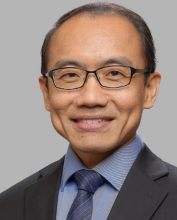
Sim Kwan Kiat
Kwan Kiat heads Rajah & Tann’s Restructuring & Insolvency practice group.
Kwan Kiat’s practice comprises both disputes and advisory work. He regularly advises and acts for debtors, creditors and financial advisors in insolvency and restructuring matters, many of which have a strong cross-border element.
Kwan Kiat is cited and recognised as a market leading practitioner in the field of restructuring and insolvency in publications including Chambers Asia-Pacific, Who’s Who Legal (South East Asia), Asia Pacific Legal 500, IFLR 1000, Asialaw Leading Lawyers, and Best Lawyers.
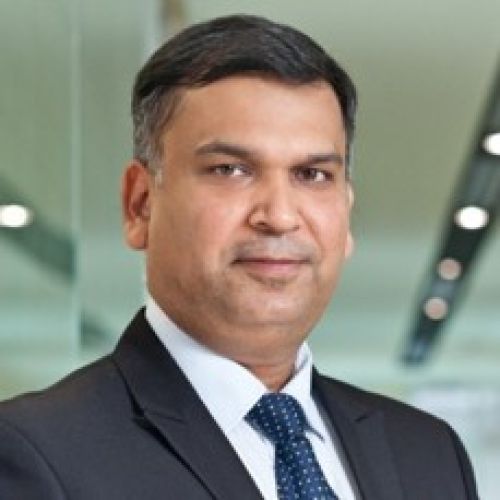
Mayank Aggarwal
Mayank is an Associate Partner at EY-Parthenon’s Corporate Finance practice in Singapore. He advises corporates on debt fundraising, structured financing, and capital solutions involving private credit funds, banks, and institutional investors. He also advises financially stressed companies on financial restructuring, debt workouts, liquidity management, and turnaround strategies aimed at stabilising operations, preserving value, and enhancing stakeholder outcomes.
Over the course of his career, he has advised on numerous complex transactions across Southeast Asia, spanning a broad range of industries, capital structures, and financing solutions.
FEES AND FUNDING